Under the Ministry of Education’s updated teaching and assessment direction, physics learning is no longer centred solely on memorising formulas and applying standard calculations.
Instead, students are increasingly expected to understand concepts deeply, explain physical phenomena clearly, and apply ideas to unfamiliar contexts.
These shifts affect how physics is taught in classrooms, how students are assessed in national examinations, and how they should prepare for O Level and A Level Physics.
Memorisation to Conceptual Understanding
One of the most significant changes under the latest MOE framework is the reduced emphasis on rote memorisation.
While formulas and definitions remain important for o level physics, students are assessed on whether they understand the physical meaning behind those formulas.
For example, instead of simply substituting values into an equation, students may be required to explain why a particular relationship applies, interpret graphs correctly, or justify assumptions made in a model..
This change is consistent with MOE’s broader move towards conceptual mastery and deeper learning across science subjects.
O Level Physics: Greater Focus on Explanation and Reasoning
O Level Specimen Paper 2024
Source: O Level Specimen Paper 2024
Recent examination papers and examiner reports show a stronger emphasis on explanation-based questions. Students are often asked to describe physical processes, explain trends, or justify conclusions using appropriate scientific language.
Marks are increasingly awarded for clarity of reasoning, correct use of terminology, and logical structure.
Even when calculations are correct, weak explanations can still result in lost marks. This reflects
O Level Physics:Practical Skills
Pendulum Physics practical 2024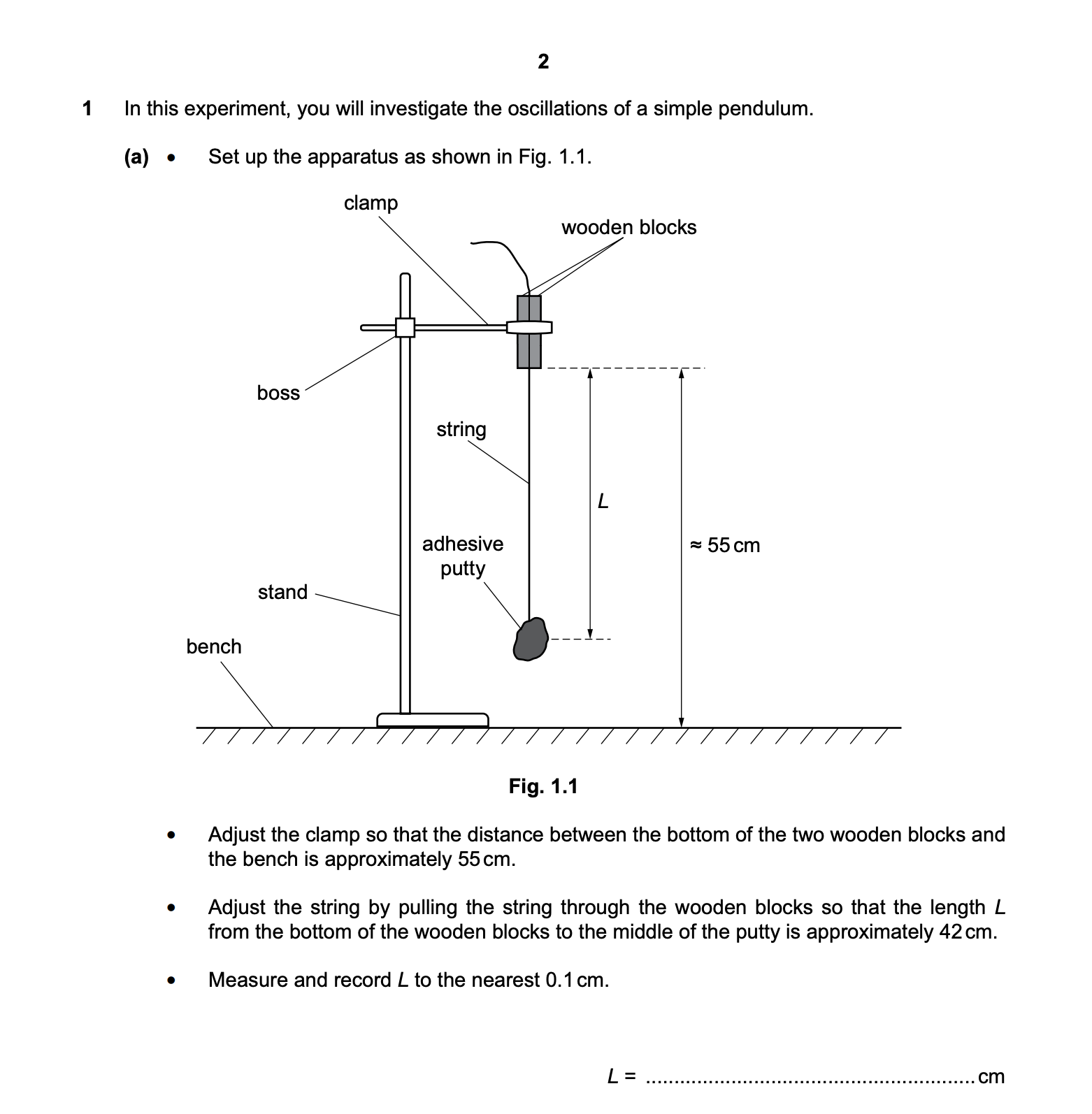
Source: Physics Practical Specimen Paper 2025
Practical work remains a core component of physics education, but the expectations have evolved.
Practical Component: Paper 3/ Practical/ 1 h 50 min / 40 Marks/ 20%
Practical assessments now focus less on following fixed procedures and more on skills such as data interpretation, experimental planning, identifying sources of error, and evaluating results.
Students are expected to understand why an experiment is designed in a particular way and how measurements relate to physical concepts. This applies to both O Level and A Level Physics practical assessments and is reinforced in SEAB examiner feedback.
O Level Physics: Interpretation Skills
O level physics line of best fit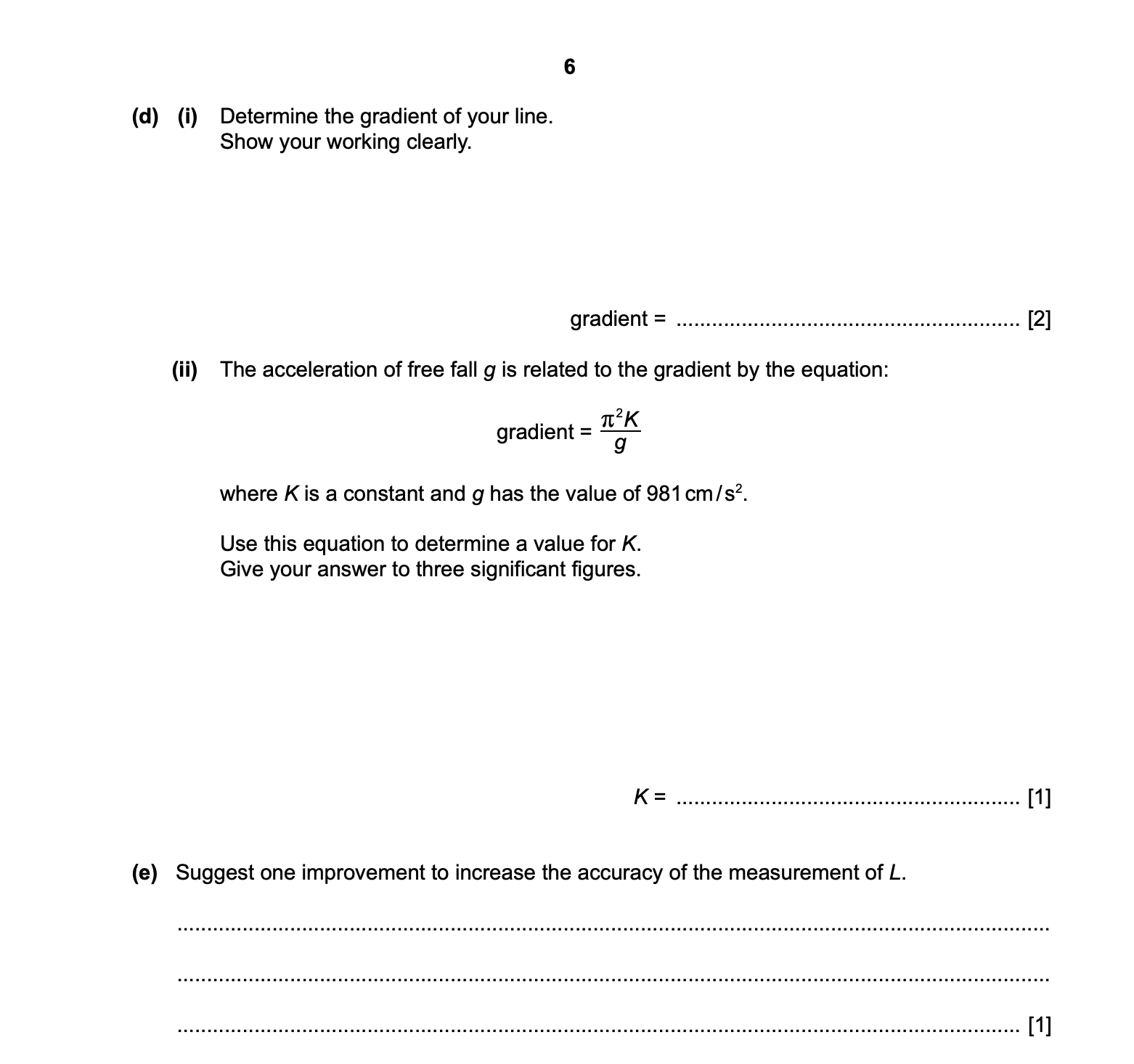
Graphs, diagrams, and data tables play a larger role in current physics assessments. Students must be able to interpret trends, link representations to physical meaning, and draw correct conclusions from given information.
This skill is especially important in higher level questions, where multiple representations may be combined in a single problem.
What This Means for Students and Parents
Under the latest MOE framework, success in Physics requires more than extensive practice alone.
Students benefit most from learning approaches that emphasise conceptual understanding, clear explanation, and the ability to apply ideas to unfamiliar situations.
Parents may notice that students who previously did well through memorisation alone find Physics more challenging, while students who take time to understand underlying principles show steadier improvement over time.
This shift can be unsettling, especially for students who feel they are working hard but not seeing results.
Lessons are adjusted to match each student’s pace, with targeted clarification of weak concepts, guided practice in exam style questions, and step by step breakdowns of complex topics. This ensures that students who need more time or structure are not left behind, while gradually building confidence and exam readiness in line with current MOE and SEAB expectations.
References and Official Sources
Ministry of Education Singapore
https://www.moe.gov.sg
Singapore Examinations and Assessment Board
https://www.seab.gov.sg
MOE Science Curriculum Framework
Excel in Physics with PivotPhysics Tuition
PivotPhysics offers specialised Physics tuition for O-Level, A-Level H1/H2, and IP Physics students in Singapore.
With a proven track record, our lessons combine clear concept teaching, real-life applications, and exam-focused techniques to build a strong foundation and boost confidence in Physics.We also provide Physics Practical Lab Coaching aligned with SEAB standards to help students excel in their Paper 3 components.
👉 Contact us today to find out how PivotPhysics can support you or your child in achieving excellence in O-Level, A-Level, or IP Physics.