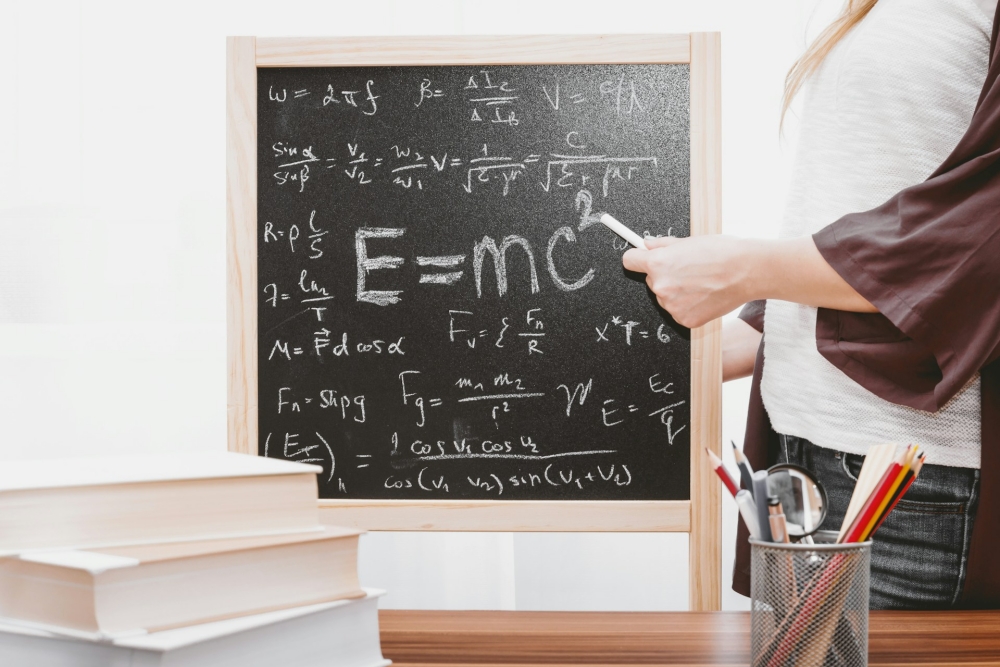
Most Physics students experience learning as a long, exhausting process. A single lecture runs for an hour, and a textbook chapter spans thirty pages. Students walk out feeling overwhelmed, believing there is always more to know than time to learn it.
However, the core physics concept is not long: the way it is being taught is. A properly structured explanation fits in under three minutes, giving students far more usable understanding than an hour-long presentation. Below is what “under three minutes” actually means and how our physics lessons use the time saved to build real exam mastery.
Why Physics Concepts Feel Bigger Than They Are
School lessons and textbooks are structured for coverage, not clarity. A single chapter contains the core principle, derivations, worked examples, applications, and historical context. The working idea gets buried beneath the volume.
When figuring out how to learn physics in the modern classroom, especially as technology and AI transform physics learning, students often treat essential principles and secondary details as equally important. Without a filter, they attempt to memorise the entire hour. At Pivot Physics, we separate the foundational concept from surrounding clutter, making it short, clear, and easy to hold onto.
The Four Key Points Rule
Every chapter in the O-Level, IP, or H2 Physics syllabus can be broken into four key points or fewer.
For example, Kinematics reduces to four core pillars:
- Definitions of displacement, velocity, and acceleration.
- The SUVAT equations and when they apply.
- Reading and converting motion graphs.
- Handling two-dimensional projectile motion.
Everything else in the chapter is merely a variation of these four points. A student holding four core points can rebuild an entire chapter under exam pressure, whereas a student holding forty isolated facts is one blank moment away from losing the topic entirely.
What “Under Three Minutes” Actually Means
Three minutes is the exact time required to explain a concept once stripped to its essentials:
- The Principle: Stated clearly in one sentence.
- The Mechanism: The core mathematical relationship (e.g. Faraday’s Law for induction).
- The Condition: The specific boundary conditions (e.g. magnetic flux must actively change).
- The Common Pitfall: The mistake students routinely make in exams.
A proper three-minute explanation delivers more functional clarity than an hour spent watching a derivation you cannot reproduce.
Why Short Explanations Hold Up in the Exam
Long explanations do not mean deeper mastery. National exams reward candidates who can reason from first principles. Among our most effective physics exam tips, we emphasise that a three-minute explanation serves as the working blueprint of a topic. Structured practice and past papers then build application skills on top of it, showing students how to improve physics results within a single term.
What This Looks Like in a Lesson
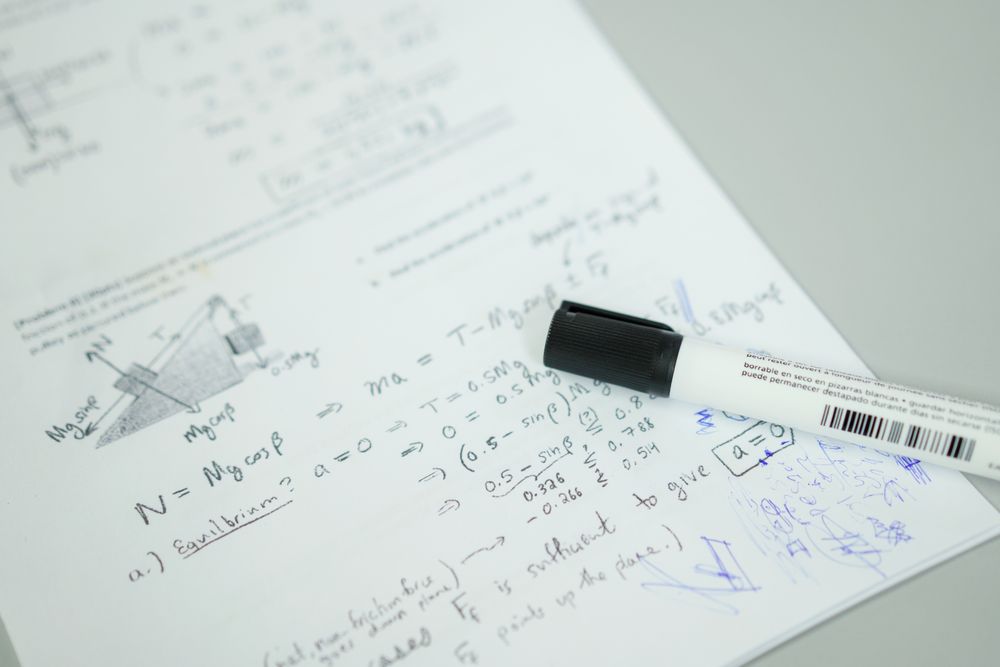
Every Pivot Physics lesson opens with the concept stripped to its bare essentials. The rest of our two-hour classes is spent applying that concept through worked examples, exam-style questions, and on-the-spot error correction. Students leave our O-Level Physics tuition and A-Level H2 Physics tuition sessions able to state the concept clearly and apply it directly to complex exam problems.
The Difference Under Exam Pressure
A concept a student can rebuild in under three minutes is a concept they still have at 9 pm the night before the exam. A concept taught in 40 minutes and never simplified is one many students end up carrying only in fragments.
If revision feels like there is always more to cover than time to cover it, our Physics tuition in Singapore is designed around the shortest working version of every chapter. Register for a free trial class at our Jurong East, Novena, Bukit Timah, Parkway, or Hougang campuses to see how one lesson approaches an entire chapter.