You can walk out of Paper 1 and Paper 2 feeling solid. The concepts were familiar, the question types recognisable, and the marks largely went where you expected them to go.
Then the physics practical exam results come back, and marks are missing that have nothing to do with your understanding of the content. Instead, they were taken off for recording a measurement to the wrong number of significant figures, choosing the wrong graph scale, or failing to control a variable. These are errors of method, not content, and you cannot eliminate them by revising the theory more often.
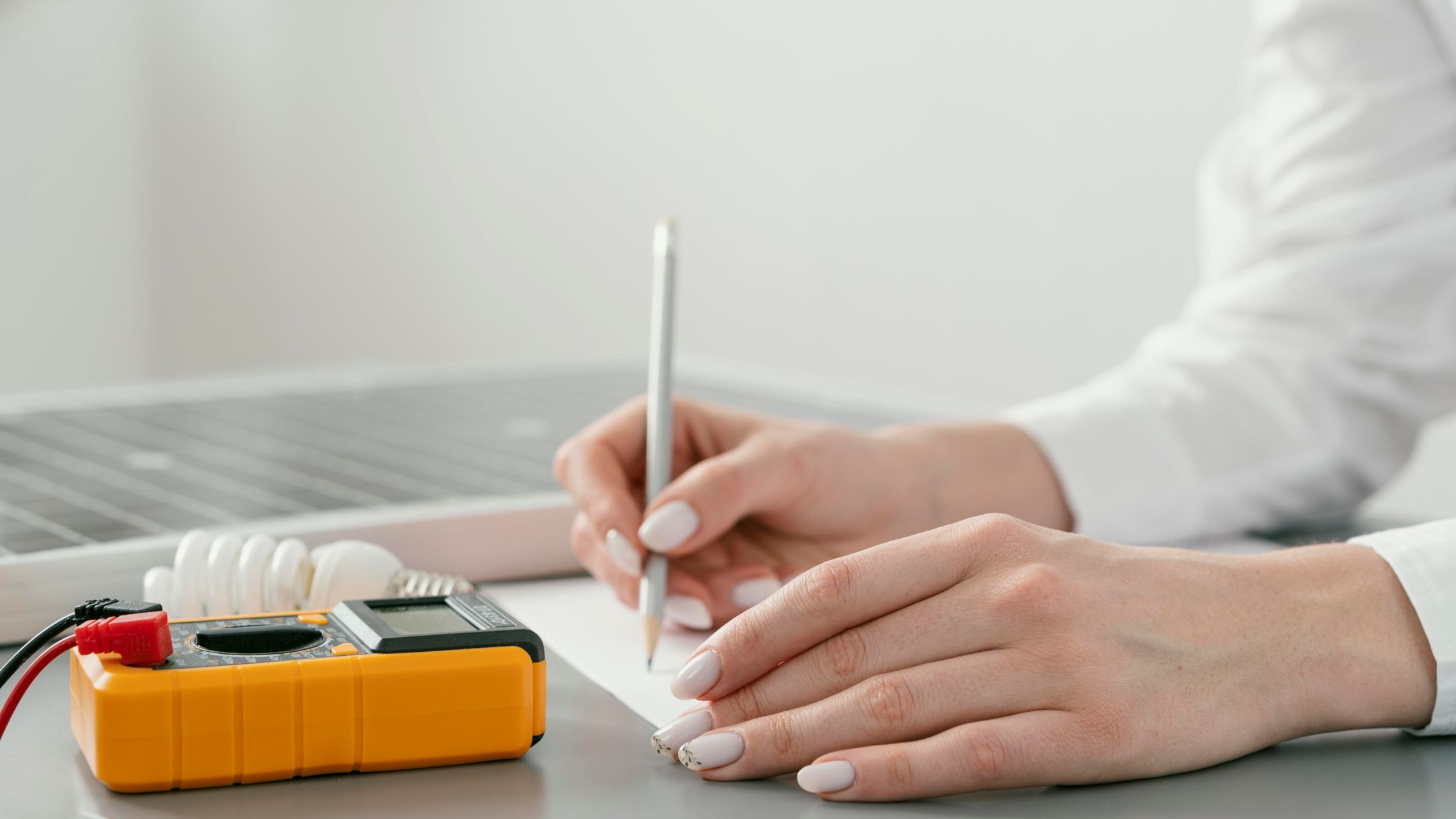
At Pivot Physics, we call this the Execution Gap: the distance between understanding a concept and executing it correctly under practical exam conditions. The O-Level Physics practical and H2 Physics Paper 3 are the papers where that gap becomes visible, as they test not just knowledge but its application. They demand live decision-making: can you plan an experiment correctly, control variables, and measure accurately, all under time pressure with real equipment?
For most students, the answer is “not always”. And the marks reflect it.
The Three Places Marks Actually Go Missing
This gap shows up in three places: planning, graphing, and measurement. None indicate poor understanding, and none can be fixed with additional revision. They are execution skills, and dedicated physics practical tuition with repeated practice under real exam conditions helps to build them.
Planning
Students often design an experiment that sounds reasonable but leaves a variable uncontrolled, or omits crucial steps like repetition to confirm the reliability of results. In the O-Level and A-Level physics practical, a complete experimental plan is broken down into its components such as identifying variables, specifying controlled conditions, and detailing the measurement procedure. The experiment design is then marked against those. A step left out of the plan is a mark lost during grading.
Graphing
Students sitting H2 Physics Paper 3 who have practised only on worksheets often know what the graph should show but struggle to execute it under time pressure. The errors are predictable: a scale that leaves most of the grid empty, missing units on an axis, a line of best fit that doesn’t follow the data. These marks were not lost because the student didn’t understand the physics. They were lost because drawing a graph correctly under exam conditions is a different skill from drawing one at a desk with no clock running.
Measurement
Precision is necessary in science. That is why marking schemes consistently penalise measurement errors, such as reading a micrometre to 0.1 mm instead of 0.01 mm, or recording a value that doesn’t match the apparatus’s resolution.
Why This Gap Doesn’t Close from a Worksheet

Most students, when buckling down to study for the physics practical exam, default to the usual method: read the instructions, understand the method, move on. They cut back on O-Level physics tuition and A-Level H2 physics tuition, thinking a couple of good workbooks and some intense revision will be enough to score well on this paper, like the others.
The problem is that knowing how to do something and doing it correctly under timed conditions are not the same.
Reading about how to draw a line of best fit is not the same as having drawn one on real data with the clock running. Repeated hands-on time with apparatus turns a known method into a reliable exam habit. Practice with real equipment, under conditions that resemble the exam, builds the skill.
At-home preparation usually misses this component. Dedicated physics practical classes are specifically designed to address it.
Closing the Execution Gap
Physics practical marks are not lost because students don’t understand Physics. They are lost because planning, graphing and measurement are skills in their own right, and they improve only with practice under real conditions.
If Paper 3 has been costing marks that should be there, Pivot Physics offers physics tuition in Singapore across five locations with dedicated physics practical sessions using real examination apparatus. Register for a free trial class at Jurong East, Novena, Bukit Timah, Parkway, or Hougang to see how a lab session works.